What Is the Knife Capital of Japan?
Japan's five knife towns: Seki's volume, Sakai's chef knives, Tsubame-Sanjo's forges, Echizen and Tosa's hand-forged blades, and which to visit from Tokyo.
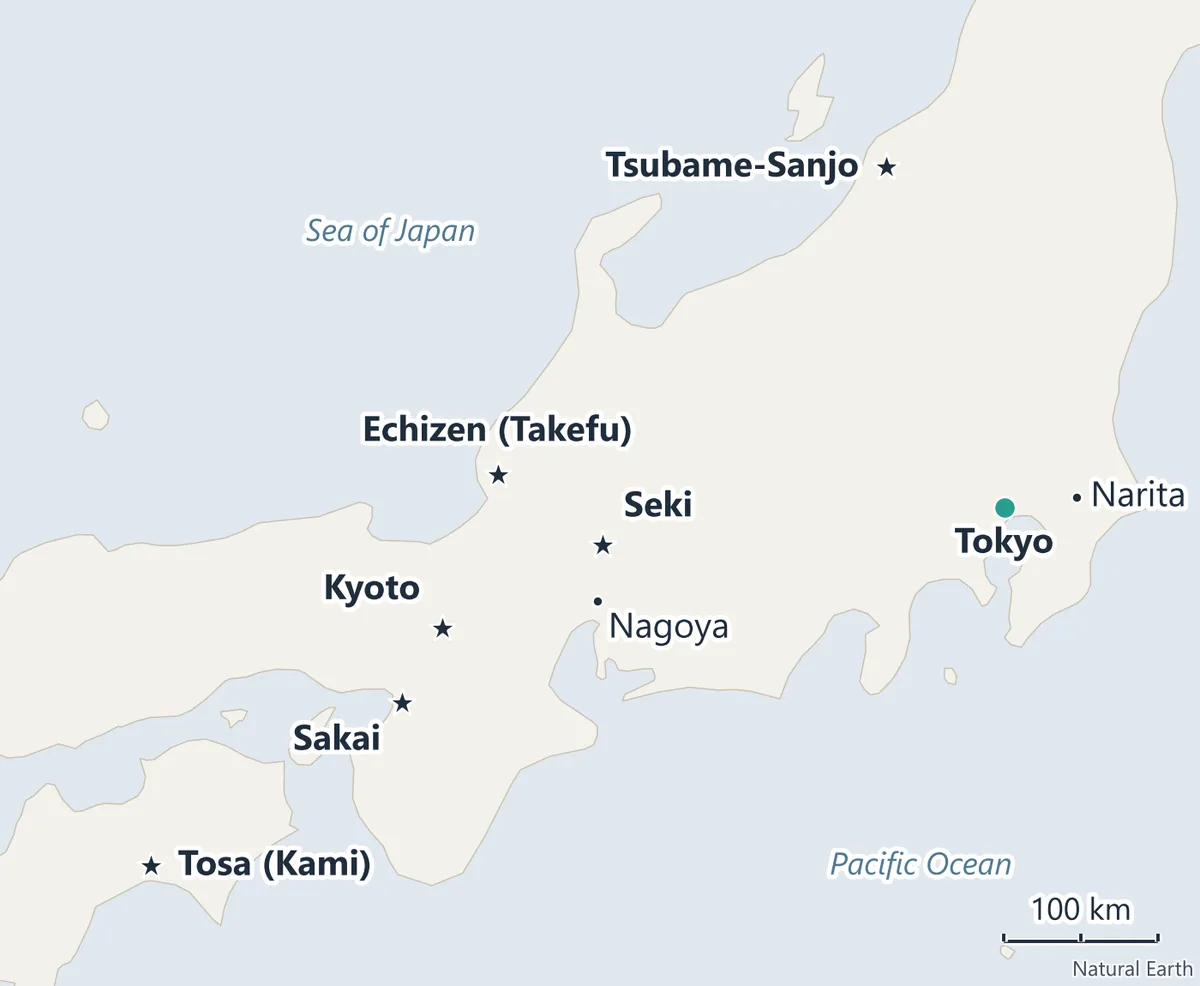
There is no single official knife capital of Japan: Seki in Gifu has the strongest claim on volume, as the largest maker of kitchen knives in the country, while Sakai near Osaka is the town known for traditional single-bevel chef knives. Tsubame-Sanjo, Echizen and Tosa are the other three great blade towns. Tokyo is where most visitors buy a knife, or finish one in a workshop.
The five towns at a glance
| Town | Prefecture | Known for | History, per craft sources | Knife product on the platform |
|---|---|---|---|---|
| Seki | Gifu | The most kitchen knives in Japan; a sword town turned cutlery hub | Sword-making tradition of over 700 years | Damascus finishing workshops, a factory tour |
| Sakai | Osaka | Traditional single-bevel chef knives | Major industry since the 16th century | None in this site’s data |
| Tsubame-Sanjo | Niigata | Forged tools, kitchen knives, copperware | Metalworking roots in the Muromachi and Edo periods | A forge day from Tokyo, a fruit-knife session |
| Echizen (Takefu) | Fukui | Hand-forged blades from a smith’s village | Dated by most sources to 1337 | None in this site’s data |
| Tosa | Kochi | Free-forged blades shaped without moulds | Over 400 years | None in this site’s data |
Seki
Seki is often counted with Sheffield and Solingen as one of the world’s great cutlery centres, and a JETRO page on Niigata says more kitchen knives are made in Seki than anywhere else in Japan. The town made swords first; after the Meiji-era ban on wearing swords, its smiths turned to household knives. Mitsuboshi Cutlery’s factory tour there opens with a lecture on what it calls the 700-year history of Seki cutlery, and explains that the work is divided between specialist companies. It is a day from Nagoya. Knife making day trips from Tokyo has the Seki options.
Sakai
Sakai’s knife trade became a major industry in the 16th century, when it made tobacco-leaf knives after Portuguese traders brought tobacco to Japan, and the single-bevel kitchen knife it is known for dates from the Genroku era (1688 to 1704). Sakai blades are made by a division of labour between smiths, sharpeners and handle makers, and Sakai Uchihamono is a nationally designated traditional craft. Retailer estimates of Sakai’s share of professional knives vary widely, so treat any single figure with care.
Tsubame-Sanjo
The two neighbouring Niigata cities have a long metalworking history; one blog notes that Tsubame specialises in stainless steel and Sanjo in iron. Gyokusendo has hammered copperware there since 1816, and the Sanjo Kajidojo blacksmith hall teaches visitors at the forge. It is about 1 hour 40 minutes to 2 hours from Tokyo on the Joetsu Shinkansen, the nearest of the five to the capital. A private copper and knife day from Tokyo visits both.
Echizen (Takefu)
Most sources date Echizen blades to 1337, when the Kyoto swordsmith Chiyozuru Kuniyasu settled in Takefu and began making sickles for local farmers. Echizen Uchihamono became the first blade craft designated as a national traditional craft, in 1979 by one source. By the 1870s the town sold more of Japan’s sickles than any other, and the Takefu Knife Village workshops still operate.
Tosa
Tosa, in Kochi on Shikoku, is known for free forging: the smith shapes hot metal by hammering without fixed moulds, so a blade can be made to suit its job. The craft dates back more than 400 years, grew with the Tosa domain’s forestry and farming reforms of the early Edo period, and covers kitchen knives as well as sickles, hatchets and hoes. Tosa Uchihamono is also a nationally designated traditional craft.
And Tokyo?
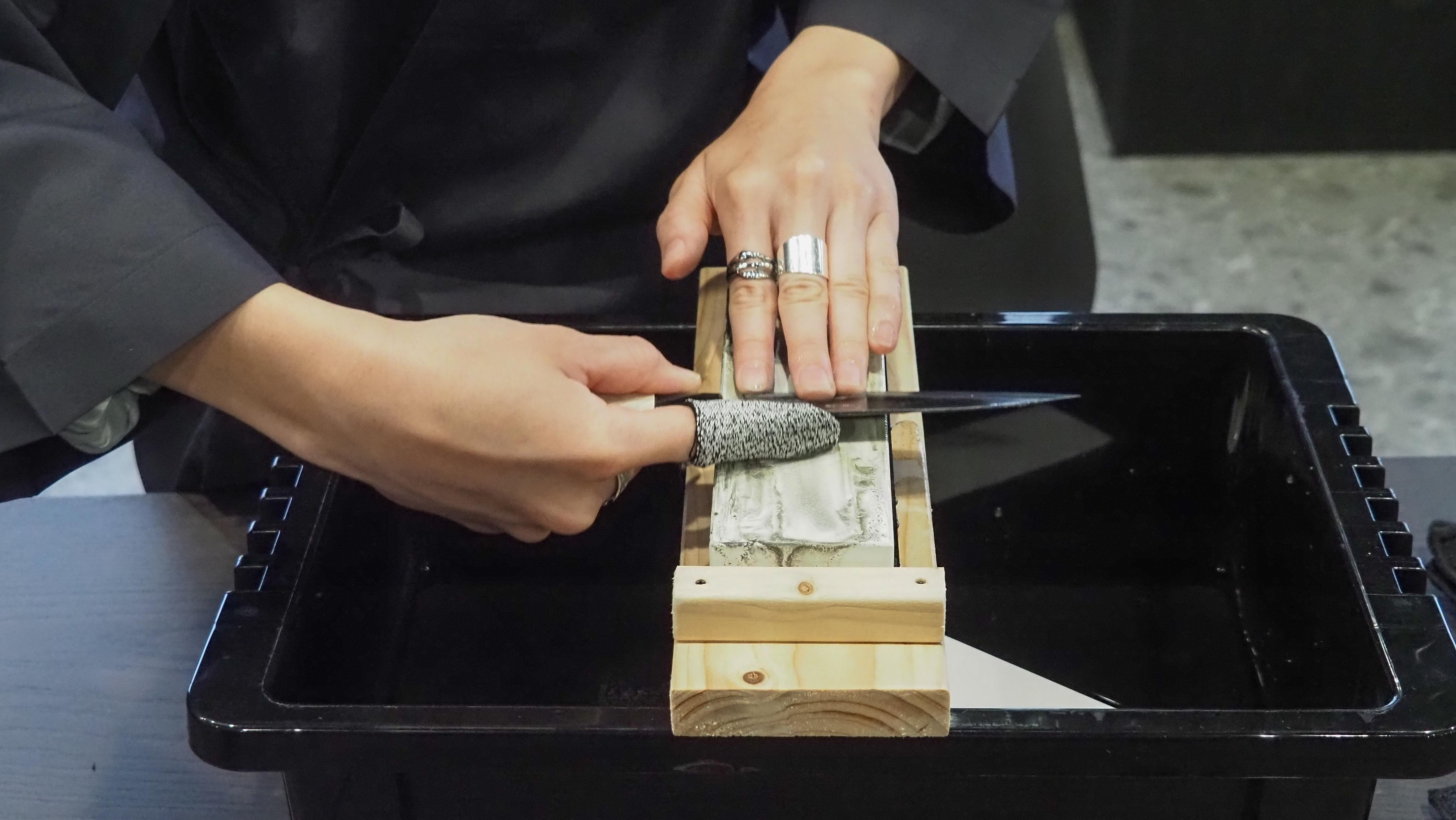
Tokyo is where the knives are sold. Kappabashi, the kitchen-tools street between Ueno and Asakusa, carries blades from Sakai, Seki and other towns, from entry-level stainless to hand-forged carbon steel. The Tokyo workshops let you finish one yourself: you sharpen a ready-made blade on whetstones, fit and engrave the handle, and take it home. No Tokyo workshop forges a blade; for that, see where to make a knife in Japan.
Knife Making Workshop, Asakusa
Sharpen, engrave and hammer on the handle of your own knife.
Check dates →Damascus Knife Workshop
Draw, etch and sharpen a Damascus blade with a craftsman.
See this workshop →Mitsuboshi Cutlery Factory Tour
40 minutes: lecture, factory floor and showroom.
See this tour →Prices, ratings and review counts from our October 2026 data check; operators change prices, so treat them as the shape of the market, not a quote.
Before you book
Whichever town your knife comes from, it flies home in checked luggage. For what each Tokyo option costs, see knife making class prices in Tokyo.
Book the Tokyo Knife Making Workshop
No time for a knife town? BAC's 1.5-hour workshop in Asakusa has you sharpen, engrave and hammer on the handle of your own knife. Rated 4.9 from 503 reviews, from about $150 on the platform in October 2026.
Check Availability & Book